ABchimie's RTV Silicone
Momentive Performance Materials offers a versatile range of RTV (room-temperature vulcanizing) silicone products designed to meet the demanding requirements of electronic assemblies. Choosing the right RTV silicone for your application depends on several key factors, such as the manufacturing process, working time, desired hardness, temperature resistance, and other specific performance requirements. We provide a wide range of products delivering durability, flexibility, and reliable protection in harsh environments.
Silicones are available in two forms: one-component or two-component systems. The choice depends on your application. One-component silicones are generally used as adhesives or sealants, ensuring sealing and bonding for your electronic assemblies. The maximum thickness for proper curing of a one-component silicone is typically 8 to 10 mm.
Two-component systems (base plus catalyst) enable potting and encapsulation of housings without thickness limitations.
Silicone curing methods
Condensation Curing Silicones
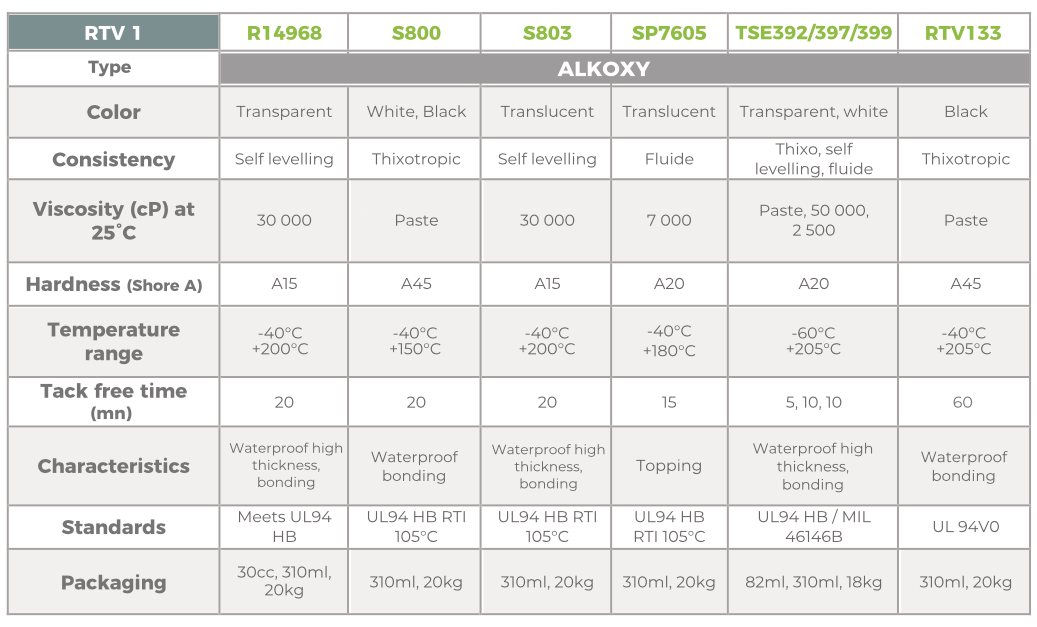
Condensation curing systems cure at room temperature for one-component products when exposed to ambient moisture. These materials are generally classified into three types of chemistry: Alkoxy, Acetoxy, and Oxime. For electronic applications, only Alkoxy systems are neutral and suitable for use on electronic boards.
Condensation systems cure regardless of the surface on which they are applied; however, there is a risk of reversion if the silicone is used in a confined area.
One-component silicones cure through an exchange reaction between ambient moisture and the curing by-product they contain.
Addition Curing Silicones
Addition-curing systems require exposure to elevated temperatures to initiate the curing process. These two-part formulations offer fast, controlled curing, making them ideal for high-performance applications where precision and thermal stability are essential.
Sealing & Adhesion with RTV Silicones
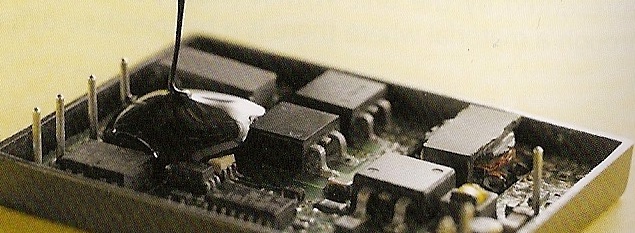
RTV silicones are widely used for bonding components and sealing against moisture, dust, and environmental contaminants. Available in both 1-part and 2-part formulations, these adhesives and sealants are excellent solutions for assembly applications involving sensitive electrical and electronic components.
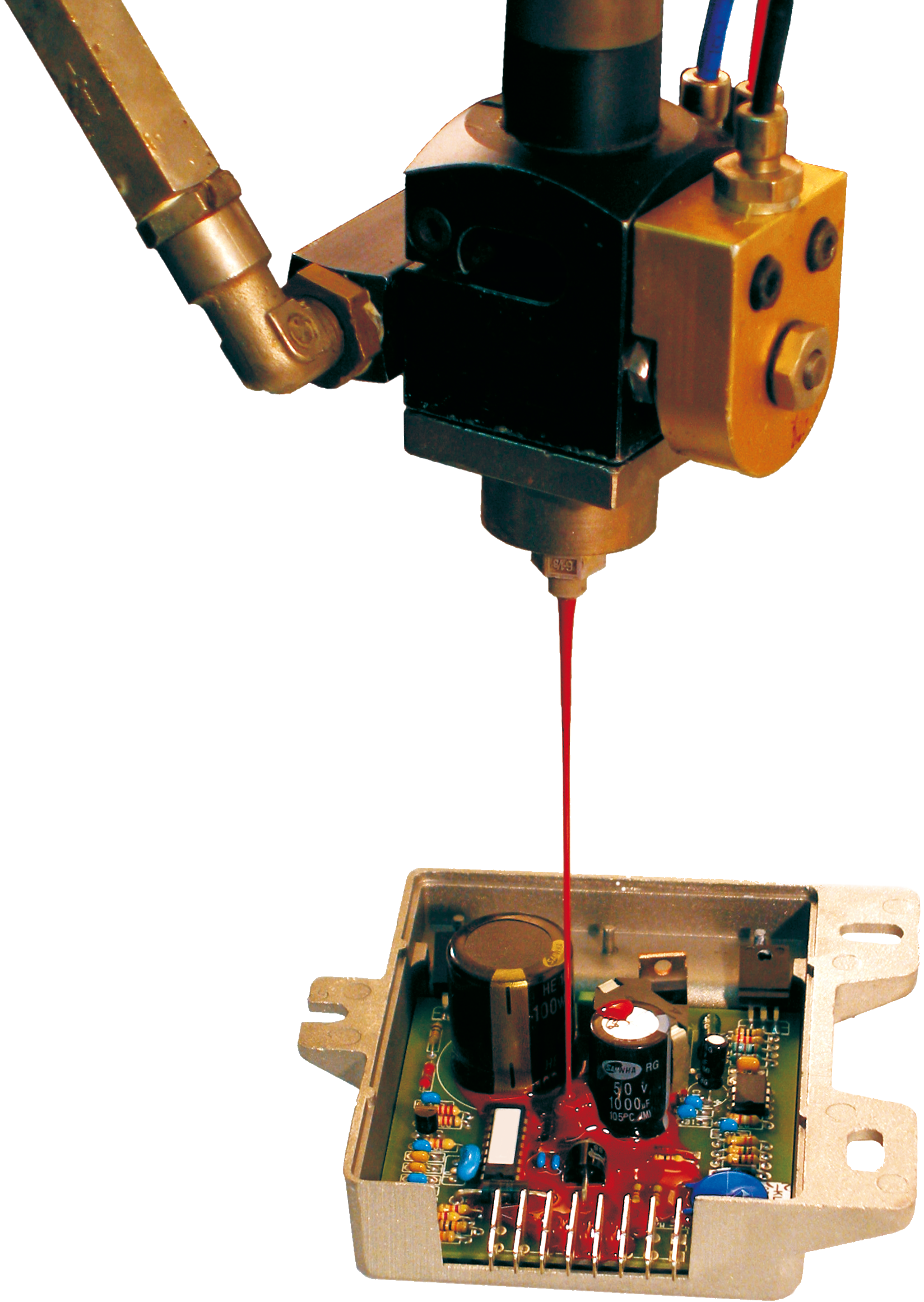
RTV silicones can be applied using a variety of methods, from manual dispensing to automated systems, and are available in tubes, cartridges, pails, and drums. Two-part systems can be mixed manually or with meter-mix dispensing equipment, depending on production needs and material behaviour after mixing.
Need assistance?
Our application engineers will help you identify the best option for your needs, or provide personalised support in selecting the ideal RTV silicone solution for your project.
Key Considerations
The questions to ask when selecting the right one-component silicone.
PERFORMANCES
- Temperature resistance?
- Fire resistance?
- Adhesion?
- Hardness?
- Dielectric strength?
- Mechanical strength?
- Thermal conductivity?
PROCESS
- Viscosity?
- Curing temperature?
- Pot life?
- Curing type (condensation or addition)?
- Curing time?
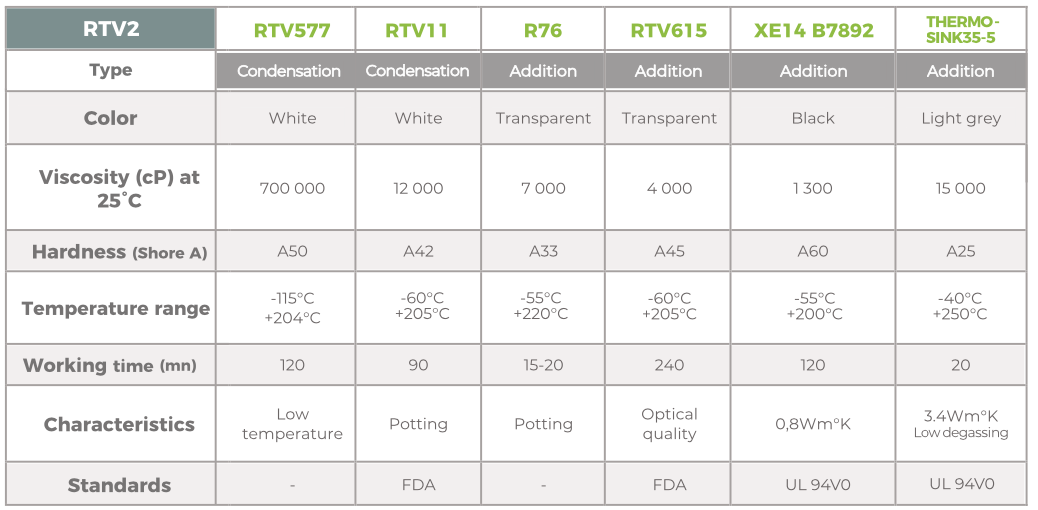
RTV2 Potting and Encapsulation Solutions
Silicone elastomers and gels are widely used in electronics as reliable mechanical and environmental protection. ABchimie offers a comprehensive range of potting and encapsulation materials with various curing speeds and viscosities.
Our formulations are designed to:
- Withstand thermal cycling
- Resist mechanical stress
- Provide fire resistance
Two-component silicones can cure via polycondensation or polyaddition systems. The curing type should be selected according to the application, with particular attention to confined areas or the presence of contaminants such as sulfur or amines, which may cause inhibition.
Whether you are protecting delicate components or require robust materials for demanding environments, we have a solution tailored to your needs.
Need help?
Our application engineers are here to help you choose the most suitable coating solution for your specific needs. Please feel free to reach out.
Key Considerations
The questions to ask when selecting the right two-component silicone.
PERFORMANCE
- Temperature resistance?
- Fire resistance?
- Hardness?
- Dielectric strength?
- Mechanical strength?
- Thermal conductivity?
PROCESS
- Viscosity?
- Curing temperature?
- Pot life?
- Curing type (condensation or addition)?
- Curing time?
How to choose your silicone?
Selecting the most suitable silicone product starts with clearly defining your specific application requirements. Key factors to consider include:
Need assistance?
Our application engineers will help you identify the best option for your needs, or provide personalised support in selecting the ideal RTV silicone solution for your project.
ADVANCED CLEANING &
PROTECTION SOLUTION FOR
RELIABLE PCB PERFORMANCE.
- Environmentally friendly solutions to protect your PCBA.
LINKS
FOLLOW US
ABchimie is part of Chase Corporation

OUR OFFICE

1230, route de la porte, ZA La Rivoire
38630 Corbelin – France
Tel: +33 (0) 474 83 1219
info@abchimie.com
www.abchimie.com

